
 7 min read
Faster Startup Growth with Nearshore IT: How UK Scale-Ups Build and Ship Faster

Introduction: When Hiring Delays Start Blocking Growth
UK startups are not short on ideas or demand, but turning those ideas into shipped products often slows at the same point. Key technical roles take too long to fill.
Senior engineers and DevOps specialists sit at the centre of most roadmaps, yet local hiring cycles regularly stretch for months. When that happens, release dates move, revenue plans slip, and confidence across the business starts to wobble.
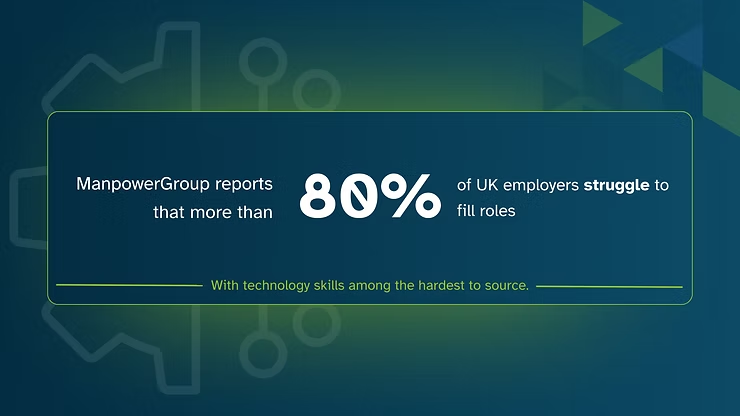
This challenge is widespread across the UK.
Nearshore IT helps relieve that pressure by adding delivery capacity quickly. Teams work in overlapping time zones and integrate closely with UK product teams.
In this article, we explore how nearshore teams speed up delivery, how European-led scaleups make distributed engineering work, and how founders can scale without losing control.
Scaling Smarter: How Nearshore IT Actually Changes the Build Cycle
Nearshore IT reshapes the build cycle in a few clear ways. Capacity is added without reorganising the company, delivery stops waiting on individual hires, teams scale with real demand, and integration succeeds only when the basics are in place. Each of these shifts changes how work moves from roadmap to release.
Adding Delivery Capacity Without Rebuilding the Org
Nearshore teams work most effectively when they plug into existing product streams. They extend current teams rather than replacing them or forcing structural change.
Startups typically add a small delivery pod to the part of the roadmap that keeps slipping. That pod follows the same backlog, tooling, and review process already in place. Product ownership stays internal, while execution capacity increases. Delivery speeds up without changing reporting lines or redefining roles.
This approach raises output without creating long-term overhead. Capacity can shift as priorities change, rather than staying locked into a fixed headcount.
From Hiring Bottleneck to Delivery Pipeline
Local hiring depends on finding the right individual at the right moment. That makes delivery timelines sensitive to long search cycles, declined offers, or notice periods.
Nearshore delivery relies on an existing talent pipeline. Engineers are screened and available ahead of demand, which turns capacity planning into an onboarding problem rather than a recruitment gamble. The risk shifts away from whether a role can be filled and toward how quickly a team can be integrated.
This distinction matters in practice.
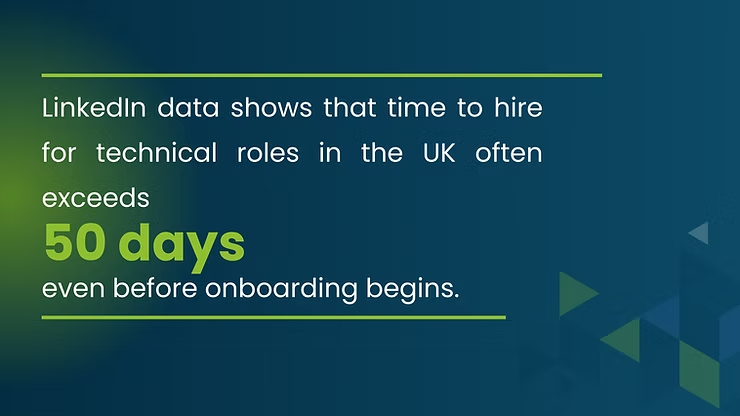
Nearshore teams reduce that uncertainty, which makes roadmap commitments more reliable.
Flexibility That Matches Startup Volatility
Startup growth rarely follows a smooth curve. Funding rounds, launches, and platform rebuilds create sharp increases in delivery demand, followed by periods of consolidation.
Nearshore teams allow capacity to expand ahead of these peaks and contract once delivery stabilises. Adjustments happen without redundancies or rushed internal reshuffles. Burn stays predictable while output remains steady.
This flexibility helps founders avoid choosing between overhiring and underdelivering.
Nearshore Readiness Check
Before scaling delivery through nearshore teams, a few fundamentals need to be in place. Perfection is not required, but clarity is:
A defined backlog covering the next 60 to 90 days
Documented coding standards and review rules
Clear ownership of architecture decisions
A consistent release and deployment rhythm
Committed overlap hours for collaboration
When these foundations exist, nearshore teams integrate quickly and contribute sooner. Without them, delivery friction increases regardless of team quality.
The Real Benefits of Nearshore IT (and How to Measure Them)
Nearshore IT only matters if it improves outcomes you can track. Here are the benefits that matter most in practice, and how to evaluate them properly.
Talent Access Beyond the UK Bottleneck
Nearshore IT expands access to experienced engineers without forcing startups into the most competitive hiring markets. Senior backend, DevOps, data, and QA automation roles are often easier to source through European talent pools than through UK-only searches.
This matters because specialist gaps tend to block entire delivery streams rather than isolated tasks.
How to measure:
Time to staff critical roles
Role fill rate across delivery teams
Team continuity over a six-month period
Failure mode:
Weak screening leads to rework and slower progress.
Fix:
Require technical vetting and short trial sprints before scaling.
Speed and Iteration Without Chaos
Nearshore teams improve speed when faster staffing translates into steady execution. Speed only becomes useful when it stays predictable across sprints.
How to measure:
Lead time from ticket creation to deployment
Release frequency across multiple sprints
Sprint predictability against planned scope
Failure mode:
Speed drops when scope and acceptance criteria remain unclear.
Fix:
Use tight sprint planning and visible demos to anchor expectations.
Cost Efficiency That Protects Runway
The financial value of nearshore IT comes from total delivery cost rather than lower hourly rates. Fewer failed hires reduce rework, while lower churn risk helps stabilise burn over time.
How to measure:
Cost per delivered feature
Burn stability across quarters
Failure mode:
Low-cost capacity increases rework and delays releases.
Fix:
Set quality gates and shared standards early.
Cultural and Regulatory Fit
Nearshore teams often align more closely with UK working styles than distant offshore models. Shared context and overlapping hours reduce friction during collaboration and improve handover quality.
This alignment supports clearer communication and more reliable delivery over time.
How to measure:
Communication friction during handovers
Clarity of ownership across tasks
Delivery predictability over time
Failure mode:
Overlap hours erode as schedules drift.
Fix:
Protect fixed shared working windows and treat them as non-negotiable.
How High-Growth Companies Use European Engineering at Scale
European engineering has become a core part of how fast-growing tech companies scale delivery. With more than 9 million ICT specialists employed across the EU, companies can build serious engineering capacity across Europe without relying on one location.
The examples below show how that capacity is organised and used at scale.
Wise: Scaling Engineering Through European Hubs
Wise operates engineering teams across multiple European locations rather than concentrating delivery in the UK. Its footprint spans cities including London, Tallinn, Budapest, and other European hubs, reflecting a deliberate distributed setup rather than a single-office model.
These teams own meaningful parts of the product and participate in core technical decisions. Engineering work is shared across locations using common standards and shared ways of working, which allows Wise to scale delivery without relying on one hiring market.
What startups can copy:
European teams treated as core contributors rather than remote support
Ownership defined by product area, not location
Shared documentation and practices that support distributed execution
Spotify: Distributed Teams Powering Continuous Delivery
Spotify’s approach is built around small squads that can ship end to end with a clear mission and the freedom to decide how they work. Spotify has described this as a model where squads aim to stay autonomous, “like a mini-startup,” while still aligning to shared direction.
Autonomy only holds at scale when alignment is designed into the system. Spotify’s own engineering culture write-up notes that practices vary from squad to squad, which matters because it signals a real tradeoff. Teams can tailor how they execute, but they still need shared coordination habits so work does not splinter.
What startups can copy:
Give each squad a clear mission and a real outcome to own, not a list of tasks
Define decision rights early, so squads can move without waiting for constant approval
Use lightweight rituals that keep teams aligned across locations, supported by written context and async updates
Why Nearshore Creates a Strategic Edge in Competitive Markets
As startups scale, execution risk moves out of engineering and onto the leadership agenda. Roadmaps, regulatory timelines, and funding plans depend on whether delivery capacity holds under pressure. Nearshore IT matters at this level because it reduces uncertainty where decisions carry the highest cost.
Execution Confidence Under Pressure
Leadership confidence comes from predictability. Nearshore support stabilises capacity, which lowers the risk of missed milestones caused by hiring delays or attrition. Planning improves when timelines are based on available teams rather than roles still being recruited. Fewer last-minute replans follow, and delivery commitments become more credible.
Risk Reduction in Regulated Environments
In regulated sectors, disruption creates exposure. Audits, security reviews, and compliance work rely on continuity and documented ownership. Nearshore models reduce risk when teams remain stable and responsibilities are clearly defined. Fewer handovers protect system knowledge and simplify audit readiness, which lowers operational strain during reviews.
Stronger Investor Narrative
Execution risk weighs heavily in investor decisions, especially in tight markets.
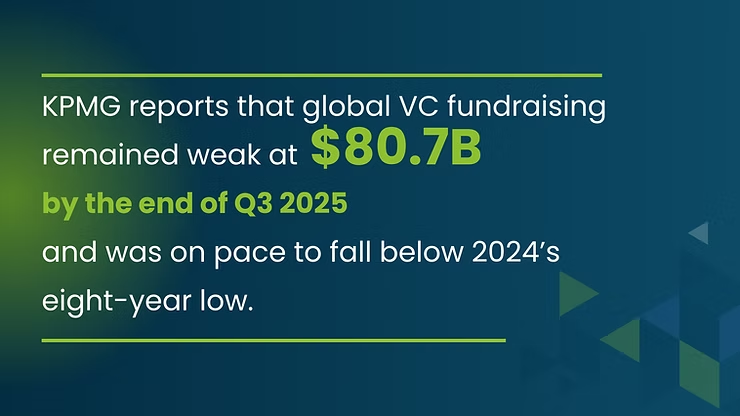
In this environment, predictable delivery and controlled burn signal maturity.
Engagement Models That Support Growth Stages
Nearshore engagement models give leadership flexibility without long-term lock-in. Capacity scales with demand rather than ahead of it, reducing financial risk while preserving the ability to move quickly when priorities change.
Choosing the Right Nearshore IT Partner
Nearshore only works when the partner can operate inside the realities of a startup. The goal here is not to find more developers, but to find a team that can move work forward without adding friction.
Signs of Real Startup Experience
Look for partners who can work with incomplete information, make progress without constant direction, and think in terms of product outcomes rather than closed tickets. Delivery should feel collaborative, not transactional.
Due Diligence Questions That Matter
Ask these questions directly and listen for clear answers:
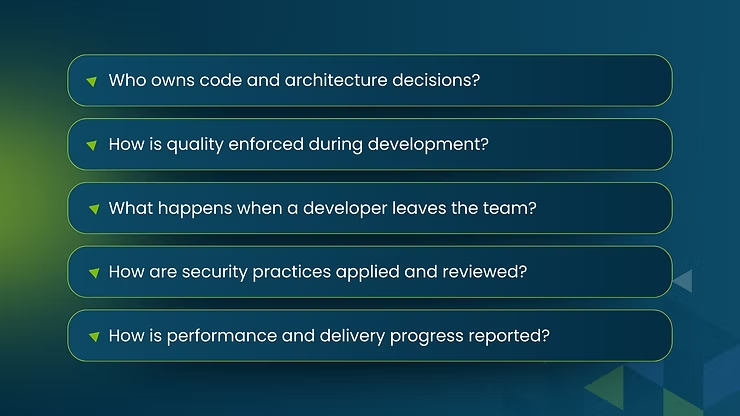
Vague answers usually point to weak ownership or hidden risk.
Red Flags to Avoid
Some warning signs show up early.
CVs offered without delivery accountability
No option to test the relationship before scaling
Quality standards that exist only on paper
No plan for continuity or knowledge transfer
These issues tend to surface later as missed deadlines or rework.
Conclusion: Nearshore IT as a Practical Growth Lever
Nearshore IT becomes most effective when it is treated as part of how a startup operates, not as a short-term response to hiring pressure. Teams that make this choice early gain more control over timing, sequencing, and risk as the business grows.
Instead of reacting to gaps as they appear, leadership can shape delivery around capacity that is already in place. That shift creates room to focus on priorities that matter most, including product direction, market timing, and long-term growth decisions.