 7 min read
Hiring for Tech Roles in the UAE? Here’s What You Should Know
Hiring tech talent in the UAE often feels like chasing a moving target. More than 54 % of organisations in the UAE already report skills shortages in engineering and technology roles, while 93 % say recruitment difficulties have disrupted hiring in the past year. Roles stay open longer than planned, and top candidates slip through when expectations shift too quickly.
Many hiring teams run into these roadblocks without fully understanding the market forces behind them. This guide explores the underlying dynamics in UAE tech recruitment and lays out practical steps to help you build a more effective, future-proof talent strategy.
Understanding the UAE Tech Talent Landscape

Elon Musk and Jensen Huang at UAE Investment Forum 2025 | Image Source: screenshot from Forbes youtube coverage
The UAE has spent years positioning itself as a regional technology hub. Initiatives such as Smart Dubai and Dubai Internet City signalled a long-term commitment to digital innovation. Government entities began shifting services online, introducing paperless transactions and building data platforms that support better decisions.
Private sector organisations followed this direction. Banks upgraded core systems and channels. Logistics and transport operators invested in tracking and optimisation. Healthcare, real estate, travel, and retail rolled out digital services to reach customers more efficiently. Each new project required people who understand modern engineering practices, not just legacy systems.
As a result, the UAE became an attractive landing spot for tech professionals. Many engineers and architects now relocate from Europe, India, Southeast Asia, and North America to pursue stronger roles. Local universities and training providers feed the entry-level pipeline, but experienced specialists remain in shorter supply.
Tech Roles that Stay in Demand
Across industries, some technology roles appear again and again on hiring plans. Employers in the UAE often look for:
Mobile developers
DevOps and platform engineers
Backend and full-stack engineers
Cloud engineers and cloud architects
IT project managers and solution architects
Cybersecurity analysts and security engineers
Data engineers, data analysts, and machine learning specialists
These roles support critical systems and transformation programmes in banks, airlines, ports, healthcare providers, government departments, and fast-growing startups. That wide spread of demand keeps the market consistently tight.
Local Challenges and Opportunities
The UAE offers a strong environment for technology-driven organisations. At the same time, hiring teams face real constraints that they must recognise and plan around. Understanding these pressures helps you design a recruitment strategy that fits reality.
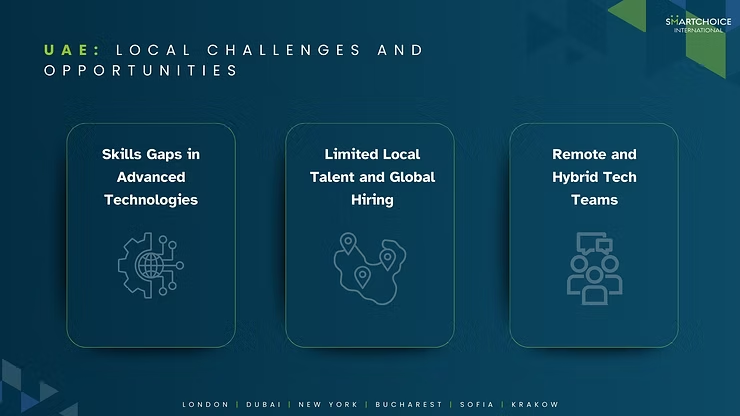
Skills Gaps in Advanced Technologies
Many organisations now expect hands-on experience with modern stacks. They want people who can work with containers, automation pipelines, cloud-native systems, and recognised security frameworks. That blend of skills is not yet common across the broader workforce.
Studies show that more than half of HR leaders in the region view technical skills shortages as a major business risk. The gap becomes obvious when hiring for roles that require Kubernetes, multi-cloud architecture, advanced data pipelines, or structured security programmes. These capabilities take time to build, so professionals who have them tend to receive several offers.
Limited Local Talent and Global Hiring
The UAE’s workforce is heavily international. Expat residents form about 87 percent of Dubai’s population, and technology teams reflect that mix. Employers cannot rely solely on a local pool, particularly for senior engineering and architecture positions.
However, this global structure also works in your favour. The UAE is a compelling destination for experienced professionals due to its safety, connectivity, and tax environment. Employers that present clear roles, realistic expectations, and a smooth relocation experience can attract excellent talent from abroad. Planning visa timelines, onboarding, and relocation support in advance makes this significantly easier.
Remote and Hybrid Tech Teams
Remote and hybrid models are now a normal part of the technology landscape in the UAE. Some teams work primarily from offices, while others mix onsite staff with remote colleagues in nearby time zones. This flexibility widens the available talent pool and supports projects that need niche skills.
Remote work only functions well when expectations are clear. Teams benefit from defined working hours, agreed communication channels, and consistent documentation habits. Explaining these aspects during recruitment helps candidates understand how they will actually work day to day.
Navigating Legal and Regulatory Requirements
Technical alignment is important but so is compliance with local employment law. The UAE’s legal framework is straightforward when you treat it as part of your hiring plan rather than an afterthought.
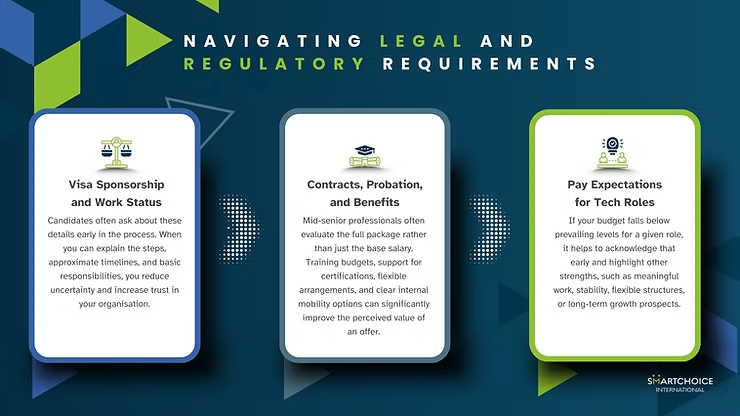
Visa Sponsorship and Work Status
Most foreign technology professionals need employer sponsorship. This process includes work permits, residency visas, medical checks, and related documentation. Employers must also decide whether to hire through a free zone entity or a mainland licence, since that choice affects procedures and legal structures.
Candidates often ask about these details early in the process. When you can explain the steps, approximate timelines, and basic responsibilities, you reduce uncertainty and increase trust in your organisation.
Contracts, Probation, and Benefits
Employment contracts in the UAE define the job title, reporting structure, salary, allowances, and key terms. They also describe probation periods, which commonly run up to six months for technology roles. Employers are required to provide health insurance and end-of-service benefits. Annual leave and public holidays are defined by law and reflected in the contract.
Mid-senior professionals often evaluate the full package rather than just the base salary. Training budgets, support for certifications, flexible arrangements, and clear internal mobility options can significantly improve the perceived value of an offer.
Pay Expectations for Tech Roles
Compensation for technology roles moves with market demand, especially in areas like cloud, security, and data. Employers that rely on old salary assumptions risk losing candidates to better-informed competitors. Regional salary guides from firms such as Cooper Fitch provide useful reference points for current ranges.
If your budget falls below prevailing levels for a given role, it helps to acknowledge that early and highlight other strengths, such as meaningful work, stability, flexible structures, or long-term growth prospects.
Best Practices for Successful Tech Recruitment
Effective technology hiring depends on clarity, structure, and respectful communication. You do not need an overly complex process. You need a process that matches the way strong candidates evaluate employers.
Start With a Sharp Role Definition
Many hiring issues begin with imprecise role definitions. When descriptions lack detail, candidates rely on assumptions, and those assumptions often differ from your expectations. Aligning early between hiring managers and HR avoids this friction.
Clear roles specify the primary tech stack, typical projects, expected responsibilities, and decision-making scope. They also outline key collaboration points, such as which teams the role works with most frequently. This level of detail helps candidates decide whether the role genuinely fits their background and goals.
Use Specialised Recruitment Partners
Deep technical roles are difficult to evaluate without relevant context. Specialised recruitment partners add value by understanding modern engineering practices and filtering candidates accordingly. Agencies such as SmartChoice International focus on technology and IT, which gives them a more accurate view of candidate capabilities.
These partners can tap into vetted networks, advise on realistic timelines, and help you balance requirements with market realities. They also understand visa processes and contract structures, which reduces delays once you decide to hire.
Rely on Skills-Based Assessment
Strong technology recruitment relies on evidence, not only on conversation. Skills-based assessments provide that evidence when used thoughtfully. They do not need to be long or exhausting. They need to be relevant.
Short coding tasks, code reviews based on previous work, architecture discussions, and scenario-based questions all reveal how a candidate thinks. These methods allow you to see problem-solving approaches, communication style, and technical depth in a controlled setting. They also help candidates experience the kind of challenges your team actually handles.
Build a Good Candidate Experience
Experienced candidates often have several options. Many use the recruitment process itself to judge whether they want to work with a company. Clear communication, realistic timelines, and respectful interactions send a strong positive signal.
You do not need a complex employer-branding campaign to create a solid experience. You need to explain the stages of the process, keep candidates informed, answer reasonable questions, and close the loop when decisions are made. This approach builds goodwill, even with candidates you do not end up hiring.
Trends Shaping UAE Tech Hiring in 2025
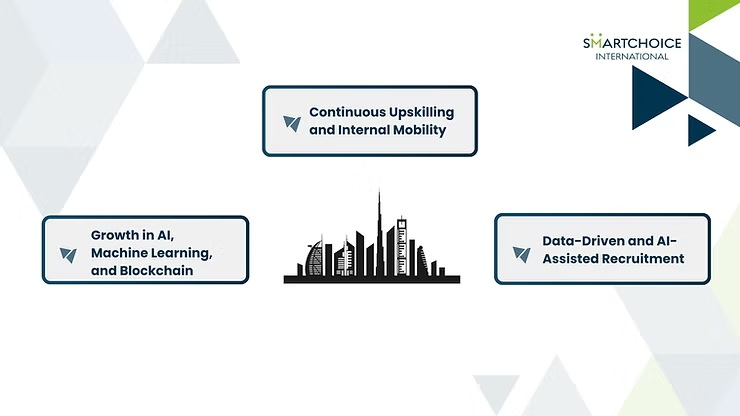
Alongside the fundamentals, several trends are shaping how technology teams grow in the UAE this year. Being aware of these shifts helps you position your organisation more effectively.
Growth in AI, Machine Learning, and Blockchain
AI-driven systems are moving from pilot projects into production. Companies now use models for forecasting, recommendation, fraud detection, and operational planning. Some organisations also explore blockchain in areas such as trade, identity, and asset tracking.
This activity increases demand for machine learning engineers, data scientists, and blockchain developers with real implementation experience. These professionals pay close attention to project quality, team capability, and the seriousness of an organisation’s investment in data. Offers that highlight these aspects tend to resonate more with them than salary alone.
Continuous Upskilling and Internal Mobility
Many organisations recognise that they cannot rely purely on external hiring to close every skills gap. Internal development has become a core part of technology strategy. Teams sponsor cloud certifications, security accreditations, and structured learning paths in areas like data engineering and platform reliability.
Candidates view this investment as a sign of long-term commitment. A company that supports upskilling signals that it plans to grow with its people, not replace them at the first sign of change.
Data-Driven and AI-Assisted Recruitment
Recruitment technology has also advanced. Many teams now use tools that help them organise pipelines, tag skills, and monitor conversion rates. Some platforms apply AI to suggest potential matches or support structured interview frameworks.
These tools should not replace human judgment, but they do help reduce manual work and improve consistency. When recruiters combine data from these systems with their own experience, they gain a clearer view of what is working and where the process needs adjustment.
Conclusion
Tech hiring in the UAE sits at the intersection of rapid digital growth, strong global interest, and real skills constraints. Employers that recognise this context and design their recruitment around it gain a clear advantage. Sharp role definitions, compliant and transparent employment practices, skills-based assessments, and a respectful candidate experience all contribute to better results.
Specialised recruitment partners add another layer of support by bringing technical understanding and access to vetted networks. Their guidance helps companies move faster and avoid common mistakes.
SmartChoice International works within this landscape every day. With regional expertise and a focus on IT and technology roles, they help employers across the UAE build teams that can deliver on critical digital and transformation goals.