 19 min read
Nearshore Romania: 9 Powerful Benefits of Hiring Nearshore Developers in Romania for Smart Tech Growth in 2026

The global technology market is currently defined by a structural shortage of highly skilled engineering professionals. For technology leaders, software architects, and procurement executives in the United Kingdom and Western Europe, scaling software development capabilities locally has become an increasingly difficult proposition. The domestic market is constrained by severe talent shortages, intense competition among leading corporations, and escalating operational costs that place immense pressure on product development budgets. To maintain a competitive edge and ensure the continuous delivery of high-quality digital products, modern enterprises are systematically shifting their focus from traditional, distant offshore outsourcing models toward more integrated, geographically proximate solutions. Within this strategic shift, the decision to hire nearshore developers Romania has emerged as a premier strategy for organisations seeking technical excellence, operational synchronicity, and substantial financial efficiency.
Romania has rapidly established itself as the preeminent technology hub of Eastern and Central Europe. The Information and Communications Technology (ICT) sector contributes significantly to national economic growth, transforming the country into a critical node for European software engineering. The digital economy in the country is projected to reach fifty-two billion euros by 2030, representing nearly ten per cent of the national Gross Domestic Product. This immense, structural growth is not accidental; it is the direct result of decades of rigorous technical education, substantial foreign direct investment, and a deliberate cultural alignment with Western business standards. For companies looking to expand their engineering capacity, nearshore in Romania offers a unique convergence of high-calibre talent and geographical convenience.
The strategy of nearshoring involves delegating software development and IT functions to teams located in adjacent or nearby countries. Unlike traditional offshoring to distant continents, which often introduces severe friction through unaligned time zones, vast cultural disparities, and complex legal hurdles, establishing a nearshore team Romania ensures that remote engineers operate as a seamless extension of the core internal team. Real-time communication is preserved, Agile methodologies function exactly as intended without asynchronous delays, and the overall friction associated with distributed development is systematically eliminated.
SmartChoice International facilitates this strategic expansion by providing highly tailored nearshoring and consulting solutions. By using deep local market knowledge, technical recruitment expertise, and a physical presence in the region, SmartChoice International connects global enterprises with top-tier Romanian engineers, enterprise architects, and technical consultants. Through careful analysis of the macroeconomic conditions, educational frameworks, and technical capabilities present in the region, this article details the nine core benefits that make building a nearshore engineering presence in Romania the definitive choice for intelligent technology growth.
1. Nearshore Romania: Unrestricted Access to a Vast, Elite Talent Pool
The foundation of any successful software engineering initiative is the availability, depth, and quality of its human capital. Romania possesses one of the most substantial and highly educated technical talent pools in Europe. As of recent market assessments in 2024 and 2025, the country is home to over 250,000 active technology specialists, ranking it among the top destinations globally for software engineering capacity and fourth in Europe for the sheer size of its talent pool. This volume of available engineers means that companies are not constrained by the fierce, zero-sum competition that defines the technology recruitment markets in London, Berlin, or Paris.
The continuous replenishment of this talent pool is guaranteed by Romania's robust, structurally rigorous higher education system. The country hosts forty-nine public and eight private universities, which collectively produce more than 9,300 to 10,000 engineering, mathematics, and computer science graduates every single year. Major academic institutions such as the Politehnica University of Bucharest, the Technical University of Cluj-Napoca, the Politehnica University of Timișoara, and Babes-Bolyai University consistently rank highly in global university assessments and maintain strict, theoretically dense curricula.
Students in these institutions undergo intensive instruction in computer science fundamentals, algorithm design, system architecture, and advanced mathematics long before they enter the commercial workforce. According to the National Institute of Statistics, the broader ICT education sector sees over 40,000 students enrolled at any given time. This academic rigour translates directly into commercial performance. Romanian nearshore developers are routinely noted for their ability to handle complex, architecturally demanding projects rather than merely executing repetitive, low-level coding tasks.
The secondary effect of this highly educated workforce is a significant reduction in technical debt for the hiring organisation. Engineers who understand the foundational principles of computer science are far less likely to produce fragile, unscalable code. Furthermore, empirical data shows that approximately seventy per cent of Romanian developers hold a bachelor's degree, and twenty-five per cent have advanced to a master's degree in technical fields, demonstrating a profound cultural commitment to continuous professional development and intellectual growth. Romania also ranks first in Europe and sixth globally for the number of certified IT specialists per 1,000 inhabitants, surpassing nations such as the United States and Russia.
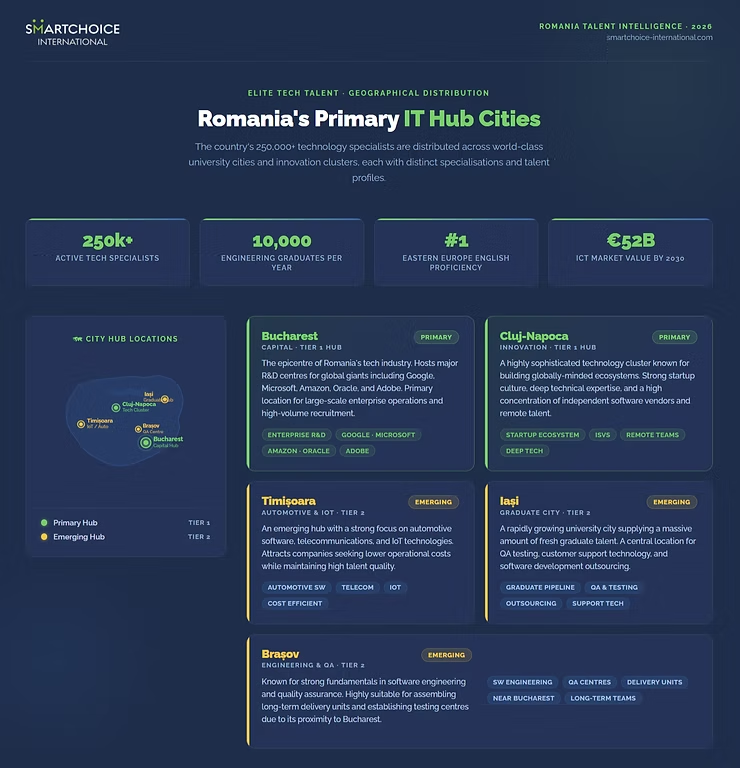
To understand the geographical distribution of this talent, it is necessary to examine the primary technology hubs within the country. The following table outlines the major cities that supply this elite workforce:
IT Hub | Core Characteristics and Market Focus |
Bucharest | The capital and largest city, acting as the epicentre of the IT industry. It houses major research and development centres for global technology giants such as Google, Microsoft, Amazon, Oracle, and Adobe. It is the primary location for large-scale enterprise operations and high-volume recruitment. |
Cluj-Napoca | A highly sophisticated technology cluster known for building globally-minded ecosystems. It is characterised by a strong startup culture, deep technical expertise, and a large concentration of independent software vendors and remote talent. |
Timișoara | An emerging secondary hub with a strong focus on automotive software, telecommunications, and Internet of Things (IoT) technologies. It attracts companies seeking lower operational costs while maintaining high talent quality. |
Iași | A rapidly growing university city that supplies a massive amount of fresh graduate talent. It is becoming a central location for quality assurance testing, customer support technology, and software development outsourcing. |
Brașov | Known for strong fundamentals in software engineering and quality assurance. It is highly suitable for assembling long-term delivery units and establishing testing centres due to its proximity to Bucharest and lower operational costs. |
For global enterprises, tapping into this distributed talent pool requires strategic facilitation and established local networks. Services such as IT staffing solutions allow companies to bypass the traditional hurdles of international hiring. When utilising these services, companies gain access to critical tech stacks including (Scrum, Kanban, React, Node.js, Angular, Java, C#, and PHP). By utilising established local frameworks, organisations can rapidly assemble dedicated agile squads comprising senior architects, full-stack developers, and quality assurance engineers. This systematic approach to talent acquisition dramatically reduces the time-to-hire, allowing companies to initiate critical development projects weeks or even months faster than if they attempted to source equivalent talent domestically.
2. Exceptional English Proficiency and Frictionless Communication
In the context of distributed software engineering, communication is just as critical as technical capability. The most brilliantly written code is ultimately useless if it solves the wrong problem due to a misunderstood business requirement. A primary reason nearshore developers in Romania are highly sought after by UK and US companies is their exceptional linguistic capability, which removes the traditional barriers associated with globalised workforce models.
Romania ranks consistently high in global language assessments. According to the EF English Proficiency Index, Romania recently placed twelfth globally among 116 countries and holds the top position in Eastern Europe, placing the population firmly in the "High Proficiency" band with a score of 593. Furthermore, the Coursera Global Skills Report 2024 notes that Romania ranks second only to Poland in English skills among Eastern European software developers, placing Romanian engineers ahead of peers in countries like Czechia, Hungary, and Ukraine.
This high level of fluency is not a superficial metric; it is the result of a national education policy where ninety-nine per cent of Romanian high school students study two or more foreign languages, with English acting as the absolute primary focus, followed closely by French, German, and Spanish. Within the technology sector specifically, English is universally adopted as the primary working language, particularly in outsourcing firms and multinational development hubs.
The operational implications of this linguistic fluency are profound for British firms. When UK product managers, business analysts, or technical leads communicate with a Romanian engineering team, there is virtually no language barrier. Complex technical architectures, nuanced business requirements, subtle user experience guidelines, and intricate mathematical algorithms can be discussed with the same clarity, speed, and precision as they would be with a team situated in London or Manchester. This linguistic alignment prevents the classic outsourcing failure mode where requirements are lost in translation, resulting in multiple iterations, costly code rework, and delayed deployment cycles.
Furthermore, exceptional English proficiency enables Romanian engineers to participate fully and effectively in Agile ceremonies. Daily stand-up meetings, sprint planning sessions, and retrospective discussions rely heavily on the ability of every team member to express abstract concepts, identify operational blockers, and debate technical trade-offs in real time. When language ceases to be an obstacle, nearshore engineers transition from being passive order-takers to active problem-solvers who contribute meaningfully to the strategic direction of the product. The ability to articulate complex logic and provide constructive, respectful pushback is a hallmark of the Romanian engineering culture, fundamentally elevating the quality of the final software deliverable.
3. Perfect Time Zone Overlap and Geographical Proximity
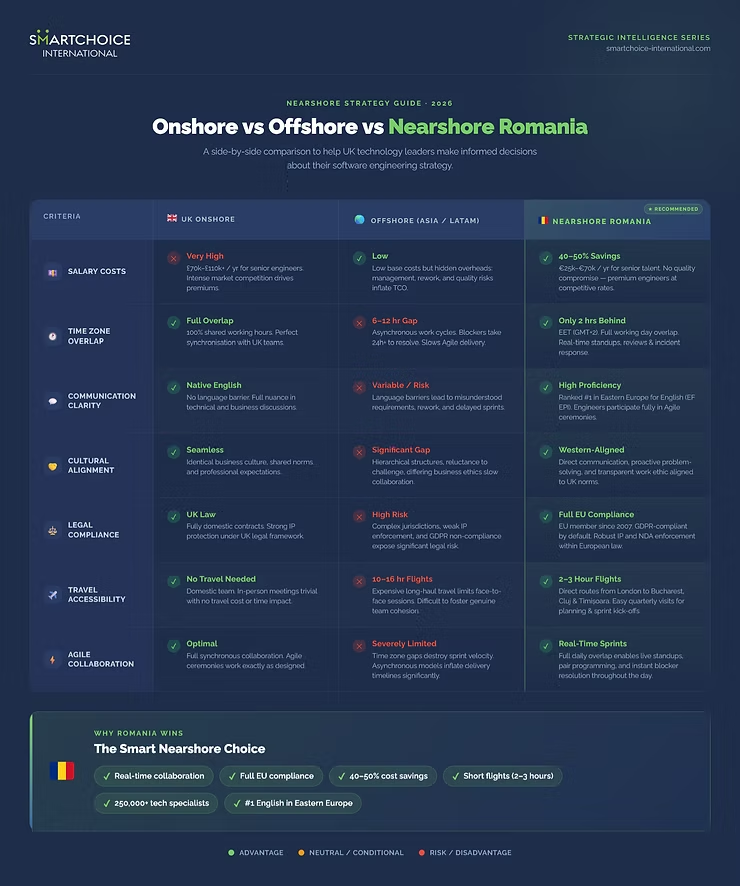
The operational success of modern software development is heavily dependent on the Agile methodology, which demands continuous, synchronous collaboration between developers, quality assurance testers, and product owners. Traditional offshoring to distant regions, such as parts of Asia or Latin America, often results in a time zone difference of six to ten hours. This temporal disconnect forces teams into an inefficient, asynchronous communication model. In such a model, a simple clarifying question asked by a developer regarding an API endpoint or a database schema might not receive an answer until the following day. This destroys project momentum, bottleneck pull requests, and severely inflates delivery timelines.
Choosing to build a nearshore team Romania completely eliminates this temporal friction. Romania operates on Eastern European Time (EET, GMT+2) and transitions to Eastern European Summer Time (EEST, GMT+3) during the summer months. For a technology company based in the United Kingdom, this translates to a minor, highly manageable time difference of just two hours. This near-perfect alignment ensures a full day of overlapping working hours between the core business and the engineering team.
Teams can conduct synchronous morning stand-ups, collaborate on intensive pair programming sessions throughout the afternoon, and resolve critical production incidents in real time without requiring either the UK management or the Romanian engineers to work unsociable hours. For Software as a Service (SaaS) vendors, where time-to-market is the primary metric of success, establishing a nearshore software development model enables continuous deployment and agile collaboration without timezone friction.
The secondary impact of this time zone alignment is the protection of employee well-being and the prevention of managerial burnout. Managing deeply asynchronous offshore teams often forces UK-based technical leaders to attend late-night or early-morning coordination calls, leading to persistent fatigue and high turnover within the management layer. Nearshoring allows the entire distributed organisation to operate on a standard, predictable daily schedule, fostering a healthier, more sustainable working environment for all involved parties.
Beyond temporal alignment, Romania offers exceptional geographical proximity. The country is highly accessible, acting as a bridge between East and West. There are regular, direct flights from London and other major European capitals to major Romanian transport hubs such as Bucharest Otopeni, Cluj-Napoca, and Timișoara, taking merely two to three hours. This proximity facilitates regular face-to-face interaction, which remains a crucial component for building trust, resolving complex architectural disputes, and establishing deep team cohesion. Companies can easily fly their nearshore teams to the UK headquarters for quarterly planning workshops, or send UK product owners to Romania for collaborative sprint kick-offs, seamlessly bridging the gap between the core business operations and the remote engineering unit.
4. Substantial Cost Efficiency Without Quality Compromise
While the pursuit of technical excellence is the primary driver for nearshoring, financial efficiency remains a critical, unavoidable consideration for technology executives. The macroeconomic structure of Romania allows companies to achieve exceptional reductions in their software development expenditure without accepting a corresponding reduction in code quality, system security, or engineering output.
Empirical market data indicates that partnering with nearshore developers Romania can yield direct cost savings of up to forty-five to fifty per cent when compared to the expenses associated with hiring equivalent domestic talent in the United Kingdom or Western Europe. In the Romanian technology sector, the average monthly salary for an IT specialist is approximately 8,400 RON (roughly £1,500), with the median monthly salary reaching 7,500 RON. Even senior experts and lead architects command highly competitive annual packages (ranging between €25,000 and €70,000 per year) that remain substantially lower than those required to secure similar talent in London. By leveraging these favourable economic conditions, businesses can access top-tier architectural and engineering talent while simultaneously optimising their operational budgets.
To illustrate the financial advantages clearly, the following table outlines the structural cost differences and hidden savings often observed between onshore and nearshore operational models:
Financial Metric / Cost Category | UK/Onshore Model (Estimated Impact) | Romanian Nearshore Model (Estimated Impact) | Strategic Advantage |
Direct Salary Costs | Extremely High (often starting at $80+/hour) | Highly Competitive (starting at $20/hour) | Immediate reduction in core payroll expenditure, allowing for larger team sizes. |
Middle & Senior Talent | Premium pricing | 15% to 25% lower gross annual salary expectations | Access to seasoned engineers, software architects, and tech leads without budget exhaustion. |
Office & IT Infrastructure | High commercial real estate costs | Managed by local provider or lower local rates | Elimination of physical overheads, hardware provision costs, and facility management. |
Legal & Compliance Costs | High domestic legal fees | Standardised EU compliance managed by local partners | Reduction in legal setup costs while maintaining strict intellectual property protection. |
Corporate Taxation | High domestic tax burden | 16% corporate tax rate and flat 10% personal income tax | Business-friendly regulatory environment that keeps vendor pricing highly competitive. |
The true financial benefit of nearshoring to Romania extends far beyond simple salary arbitrage. Traditional offshore engagements often suffer from hidden operational costs that ultimately destroy the initial financial proposition. These hidden costs include excessive management overhead required to police low-quality work, expenses related to high employee turnover, and the severe financial penalties associated with delayed product launches due to required architectural refactoring.
Because Romanian developers possess high technical proficiency, strong theoretical backgrounds, and clear communication skills, the code they produce requires fewer testing cycles, less oversight, and less rework. Consequently, the total cost of ownership for a software product built in Romania is exceptionally low. The capital preserved through this efficiency can then be strategically reinvested into the business, allowing for the expansion of marketing initiatives, the hiring of additional engineering capacity, or the funding of experimental research and development projects.
5. Deep Competence in Enterprise Technologies and Emerging Stacks
The Romanian technology sector has evolved far beyond the provision of basic web development, simple maintenance programming, or rudimentary business process outsourcing. Today, the engineering workforce is characterised by deep competence in complex enterprise systems, sophisticated cloud architectures, and emerging frontier technologies. Businesses seeking highly specific technical capabilities will find that the local market can fulfil even the most demanding architectural requirements, supported by a workforce that proactively updates its certifications.
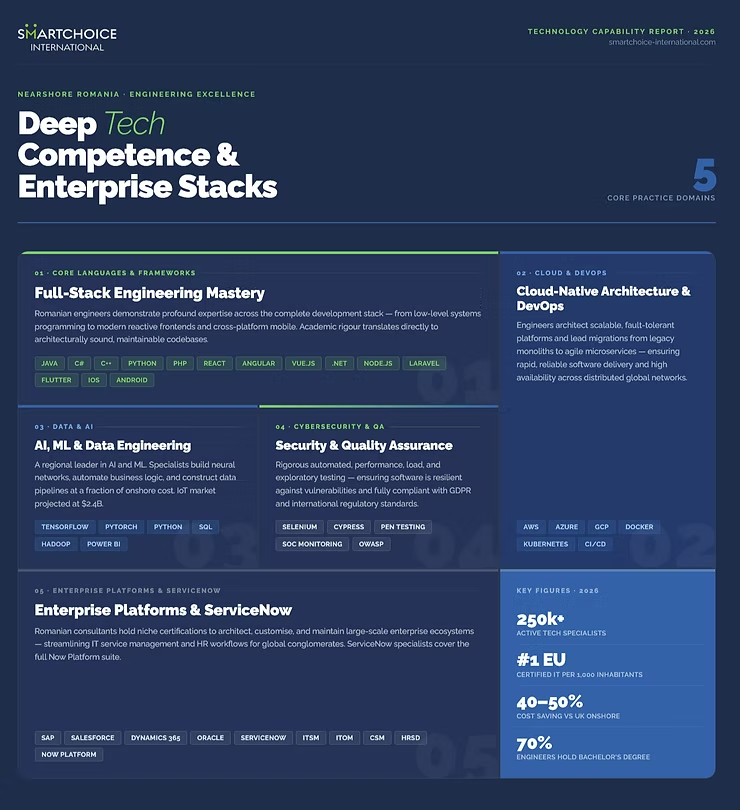
At the core of this capability is a comprehensive mastery of standard programming paradigms. Romanian software engineers demonstrate profound expertise in foundational languages such as Java, C#, C++, PHP, and Python. On the frontend, developers are highly skilled in modern, reactive frameworks including React, Angular, Vue.js, and standard JavaScript, alongside backend frameworks like.NET, Node.js, and Laravel. Mobile development is also a strong suit, with high proficiency in native Android and iOS development, as well as cross-platform tools like Flutter.
To facilitate the deployment of these applications, SmartChoice International provides specialised software, cloud, and DevOps services, encompassing a tech stack that includes (AWS, Azure, Google Cloud Platform, Docker, Kubernetes, and CI/CD pipelines). Engineers proficient in cloud-native development routinely architect highly scalable, fault-tolerant platforms. They assist enterprises in transitioning from legacy monolithic structures to agile microservices, ensuring rapid, reliable software delivery and high availability across distributed global networks.
Furthermore, Romania has positioned itself as a regional leader in frontier technological domains. The country's engineers are increasingly sought after for their proficiency in artificial intelligence, machine learning, and predictive analytics. Through dedicated data and AI practices, which utilise technologies such as (Python, TensorFlow, PyTorch, SQL, Hadoop, and Power BI), local specialists assist global enterprises in processing vast datasets. They build complex neural networks, automate intricate business logic, and construct data engineering pipelines that would be prohibitively expensive to source onshore. The Romanian AI and IoT markets are booming, with AI startups raising significant capital and the IoT market projected to reach $2.4 billion by 2025, driven heavily by the automotive and manufacturing sectors.
Quality and security are also paramount within the Romanian engineering ecosystem. The rising global threat of cyberattacks has driven an immense demand for robust security protocols and automated testing frameworks. By utilising cybersecurity and QA, and testing services, supported by a tech stack featuring (Selenium, Cypress, Penetration Testing, SOC monitoring, and OWASP compliance), businesses can deploy nearshore teams that specialise in securing digital assets. These specialists perform rigorous automated, performance, load, and exploratory testing to ensure that software products are not only functional but resilient against external vulnerabilities and compliant with strict international regulatory standards.
Finally, the digital transformation of large corporations requires specific expertise in enterprise resource planning and workflow management tools. SmartChoice International connects organisations with consultants highly skilled in Enterprise Platforms & Consulting, covering critical systems like (SAP, Salesforce, Microsoft Dynamics 365, and Oracle). A prominent example of this highly specialised enterprise capability is the deployment of ServiceNow architectures, which involves deep knowledge of (ITSM, ITOM, CSM, HRSD, and the core Now Platform). Romanian specialists possess the niche certifications required to architect, customise, and maintain these massive enterprise ecosystems, streamlining IT service management and human resource workflows for global conglomerates.
6. Cultural Alignment and High Retention Through Nearshore Romania Teams
When integrating external personnel into an existing corporate structure, cultural compatibility is a fundamental determinant of long-term success. A severe mismatch in working styles, feedback mechanisms, business ethics, or professional expectations can rapidly degrade the efficiency of a distributed team, regardless of their raw technical intelligence or academic pedigree. Romania offers a distinctly Western-aligned work culture that integrates effortlessly with British, Nordic, and broader European corporate environments.
Romanian professionals are characterised by a highly developed sense of professional responsibility, creative problem-solving capabilities, perseverance, and a direct, transparent communication style. In contrast to certain offshore cultures where challenging a superior or questioning a product requirement is viewed as disrespectful or culturally inappropriate, Romanian engineers exhibit a strong analytical mindset. If a developer identifies a logical flaw in an architectural design, a potential user experience issue in a product specification, or a security vulnerability, they will actively raise the concern and propose an optimal technical alternative. This level of intellectual engagement, common sense, and critical thinking is invaluable for product owners, as it ensures that potential failures are caught and rectified during the design phase, long before they escalate into costly production incidents.
Furthermore, the Romanian technology sector is known for its strong collectivist culture, which fosters deep team cohesion and loyalty. Professionals work well within clear hierarchies and defined reporting lines, translating to the reliable execution of delegated tasks without the need for constant, overbearing management oversight.
This cultural trait directly influences workforce stability. In hyper-competitive markets like London or Silicon Valley, technology firms frequently suffer from extreme employee turnover, constantly losing critical domain knowledge as engineers move between companies every few months. In Romania, the average workforce attrition rate hovers around a highly manageable eighteen per cent (a significant drop from pre-pandemic levels of twenty-six per cent). Developers tend to form strong bonds with their projects and colleagues, preferring long-term stability, clear progression paths, and continuous professional development over frequent, disruptive job changes.
This high retention rate provides a massive strategic advantage for the hiring company. Complex software systems require time to understand; the institutional knowledge an engineer gains over two years of working on a proprietary codebase is an invaluable asset. By maintaining stable nearshore teams, companies eliminate the severe financial and temporal penalties associated with constantly recruiting, onboarding, and training new personnel. Additionally, it is worth noting the progressive nature of the local tech scene, where women make up approximately twenty-five per cent of the workforce, positioning Romania among the leading countries in Europe for reducing the gender gap in technology.
7. Advanced Infrastructure and Secure EU Business Environment
Executing a successful distributed engineering strategy requires a foundation of legal stability, economic predictability, and advanced physical infrastructure. As a full member state of the European Union since 2007, Romania provides an exceptionally secure and reliable business environment for international corporations. Operating within the EU framework guarantees that all commercial engagements, labour laws, intellectual property rights, and data protection protocols adhere strictly to the highest European standards.
For UK and European companies, compliance with the General Data Protection Regulation (GDPR) is non-negotiable when handling user data, financial records, or proprietary information. Partnering with nearshore developers romania ensures that all data processing and software development activities remain strictly within the European legislative boundary. This entirely circumvents the severe legal complexities, compliance risks, and potential public relations disasters associated with offshoring sensitive data to unregulated or loosely regulated jurisdictions. Furthermore, the Romanian legal system provides robust mechanisms for the enforcement of non-disclosure agreements and intellectual property contracts, granting technology executives absolute peace of mind regarding the security of their proprietary source code and trade secrets.
From a macroeconomic perspective, the Romanian government actively supports the growth of the technology sector through favourable regulatory frameworks and taxation policies. The corporate environment is highly business-friendly, featuring a standard corporate tax rate of sixteen per cent and a flat personal income tax rate of ten per cent. This allows technology vendors to operate efficiently and pass those structural savings directly onto their international clients. Additionally, specific state incentives, such as a zero per cent profit tax regime for specific research and development (R&D) and innovation activities, further stimulate the creation of advanced technology hubs and innovation centres.
Underpinning this secure business environment is a world-class digital and physical infrastructure. Romania consistently ranks among the top nations globally for broadband internet speeds and network reliability, a reputation well-established in global technology circles. This high-capacity, low-latency connectivity ensures that distributed teams can seamlessly utilise bandwidth-intensive cloud environments, participate in high-definition video conferencing without interruption, and transfer massive enterprise datasets securely.
To ensure that businesses can effectively navigate and leverage this infrastructure, SmartChoice International provides integrated business & infrastructure analysis consulting. Utilising industry-standard tools such as (BPMN, UML, Jira, Confluence, and Enterprise Architecture frameworks), expert analysts evaluate a client's existing technical architecture before a single line of code is written. By mapping out workflow bottlenecks and creating a strategic resource plan, this evidence-based approach guarantees that the resulting nearshore team is perfectly calibrated in size, seniority, and skill composition to execute the business vision efficiently, preventing the costly misallocation of technical resources. The physical embodiment of this infrastructure is seen in SmartChoice's dedicated facility located at 30 Frumoasa Street in the 1st District of Bucharest, providing a highly sophisticated base of operations for visiting clients and local engineering talent alike.
8. Accelerated Delivery Using Premier Tools Like Azure DevOps
In the modern enterprise software ecosystem, the speed at which a company can safely and reliably deploy new features to production dictates its market competitiveness. Achieving this velocity requires not only skilled engineers but the rigorous implementation of automated delivery pipelines and sophisticated project management platforms. Romanian engineering teams are highly proficient in deploying and managing these complex ecosystems, particularly through the use of Microsoft's premier suite, Azure DevOps.
Engaging expert Azure & DevOps consultants in Romania enables organisations to fundamentally transform their software delivery lifecycle. Azure DevOps is a comprehensive, cloud-based platform that provides an integrated suite of tools designed to facilitate every phase of the development process, from initial conceptualisation and requirement gathering to continuous production deployment and monitoring. Romanian specialists utilise this platform to enforce strict Agile methodologies, automate tedious manual processes, and establish an unbroken chain of traceability across the entire codebase.
The practical application of Azure DevOps by a Romanian nearshore team typically involves the meticulous orchestration of several integrated services to create a flawless development pipeline:
Azure Boards: Nearshore Scrum Masters and Product Owners utilise Azure Boards to plan sprints, manage product backlogs, and track work items using interactive Kanban boards. This provides absolute transparency to the UK-based stakeholders, allowing them to monitor team velocity, track bug resolution, and observe project burndown charts in real time. Workflows and work item types are customised to match the exact processes of the hiring firm, ensuring that the remote team remains perfectly aligned with strategic business objectives.
Azure Repos: For robust source code management, Romanian engineers leverage Azure Repos to host unlimited, secure private Git repositories or Team Foundation Version Control (TFVC). Strict branch policies are implemented, requiring mandatory code reviews and pull requests before any code is merged into the main branch. This ingrained peer-review culture, facilitated by the tooling, ensures that architectural standards are maintained, conflicts are resolved systematically, and potential defects are intercepted early in the development cycle.
Azure Pipelines: The core mechanism for accelerating delivery is the establishment of Continuous Integration and Continuous Delivery (CI/CD) pipelines. Romanian DevOps engineers configure automated pipelines that are triggered the moment code is committed. These pipelines automatically compile the application, execute thousands of automated unit tests, build Docker containers, and deploy the software into staging or production environments across platforms like Kubernetes or cloud providers like Azure and AWS. This automation eliminates the human error associated with manual deployments, includes deployment gates and release approvals, and allows companies to release software multiple times a day with absolute confidence.
Azure Test Plans and Azure Artifacts: To guarantee software reliability from inception to ship, quality assurance specialists use Azure Test Plans to coordinate rigorous manual and exploratory testing sessions, linking defect reports directly back to the original user stories for complete traceability. Simultaneously, Azure Artifacts is used to create, host, and share critical internal software packages (such as NuGet, npm, or Maven modules) securely across the entire distributed organisation, controlling access through retention policies and upstream sources.
By mastering this specific, highly complex enterprise tooling, nearshore developers in Romania do not simply write code; they engineer comprehensive, automated delivery systems. This systemic approach drastically reduces the time-to-market for new digital products, allowing businesses to respond instantly to changing market conditions and outmanoeuvre slower competitors relying on manual deployment methods.
9. Scalable and Flexible Engagement Models
The technological requirements of an enterprise are rarely static; they fluctuate constantly based on market demands, shifting funding cycles, and strategic business pivots. Locking into rigid, long-term vendor contracts can cripple a company's ability to adapt and scale efficiently. Partnering with a premier it recruitment agency Romania provides the ultimate operational flexibility, allowing organisations to scale their technical capacity up or down with precision, speed, and minimal administrative friction.
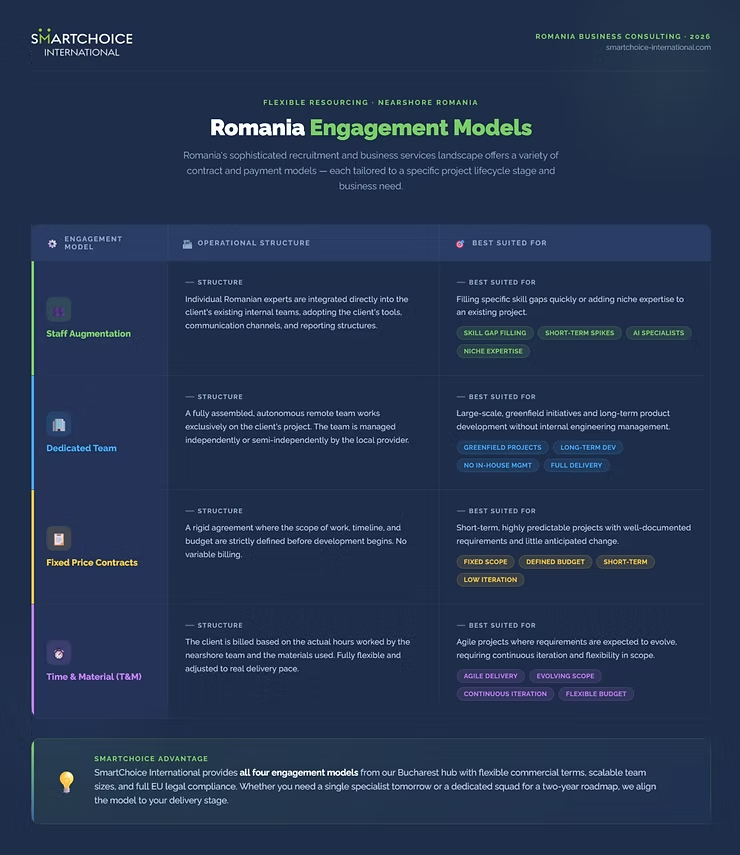
The recruitment and business services landscape in Romania is highly sophisticated, offering a variety of contract and payment models tailored to the specific lifecycle stage of a client's project. Organisations acting as Romania business consultants frequently deploy the following established models to ensure financial and operational alignment:
Engagement Model | Operational Structure | Best Suited For |
Staff Augmentation | Individual Romanian experts are integrated directly into the client's existing internal teams, adopting the client's tools, communication channels, and reporting structures. | Filling specific skill gaps quickly, handling short-term spikes in workload, or adding niche expertise (e.g., an AI specialist) to an existing project. |
Dedicated Team | A fully assembled, autonomous remote team works exclusively on the client's project. The team is managed independently or semi-independently by the local provider. | Large-scale, greenfield initiatives, long-term product development, and companies lacking their own internal engineering management. |
Fixed Price Contracts | A rigid agreement where the scope of work, timeline, and budget are strictly defined before development begins. | Short-term, highly predictable projects with well-documented requirements and little anticipated change. |
Time and Material (T&M) | The client is billed based on the actual hours worked by the nearshore team and the materials used. | Agile projects where requirements are expected to evolve, requiring continuous iteration and flexibility in scope. |
Furthermore, the methodologies used in it recruitment romania are adapting rapidly to global trends. As the market progresses through 2025 and 2026, leading agencies driving it recruitment bucharest are heavily deploying advanced technologies to optimise talent acquisition. The utilisation of artificial intelligence in resume screening and predictive analytics allows for the rapid, unbiased identification of candidates who possess not only the required technical syntax but the necessary architectural mindset.
Additionally, modern recruitment processes in Romania place an intense emphasis on assessing emotional intelligence and cultural compatibility. Through behavioural interviews, tailored assessments, and even Virtual Reality (VR) interview scenarios, recruiters ensure that the candidates presented will seamlessly integrate into the client's specific corporate culture, evaluating communication styles, work ethics, and personal values alongside technical coding tests. When companies engage in it consulting Romania, they leverage this sophisticated recruitment apparatus to build highly resilient, adaptable engineering units that can expand or contract exactly as the business requires, entirely removing the burden of local employment liabilities and complex human resource administration.
Realising Capacity and Strategic Growth
The dynamics of global software engineering demand strategies that provide simultaneous advantages in code quality, deployment speed, and financial efficiency. Relying solely on highly constrained, expensive domestic talent markets is no longer a sustainable model for ambitious technology firms seeking to scale their operations. Conversely, executing traditional offshore models often introduces unacceptable levels of operational friction, severe communication breakdown, and significant regulatory risk that ultimately undermine the integrity of the product.
Establishing a nearshore presence in Romania represents the optimal synthesis of these competing demands. By acting as a secure, legally compliant technology hub within the European Union, Romania offers an environment where complex digital innovation can thrive without administrative peril or data security concerns. The country provides unrestricted access to a massive demographic of rigorously educated, English-fluent engineers who are culturally predisposed to collaborative problem-solving, deep architectural thinking, and transparent communication.
Furthermore, the perfect time zone alignment guarantees the synchronous, high-velocity iteration cycles required by modern Agile methodologies and continuous delivery pipelines. Supported by a highly favourable macroeconomic landscape, these premium engineering capabilities are secured at a fraction of the cost of domestic equivalents, allowing companies to reinvest substantial capital back into core business growth.
SmartChoice International stands as the premier facilitator for this strategic expansion. By combining deep local market intelligence, a physical headquarters in Bucharest, and a comprehensive suite of consulting and staffing services, SmartChoice enables global enterprises to bypass the complexities of international recruitment entirely. Organisations that leverage Romanian nearshore engineering teams do not merely reduce their operational expenditure; they fundamentally enhance their architectural capabilities, accelerate their software delivery pipelines, and position themselves with the agility required to dominate their respective digital markets in the years to come.