
 6 min read
The 2026 UAE Tech Hiring Shift, Roles to Budget For and Ones to Stop Backfilling
Something has quietly changed in how companies across the UAE build their technology teams. A year ago the aim was simple. Fill every open seat as quickly as possible. In 2026 the sharper question is which seats are still worth filling at all.
The pressure is real. More than half of organisations in the UAE report skills shortages in engineering and technology roles, and most say hiring difficulties have set them back at some point in the past year. Yet at the same time, automation and AI now handle work that used to need a full desk. So the market has split in two. Some roles are slowly leaving the org chart, while others have become so contested that pay climbs almost every quarter.
If you are setting headcount for the year, this split is where your budget will either protect your roadmap or quietly drain it. Here is what we are seeing, and where the money is best spent.
The tech roles UAE employers are quietly scaling back
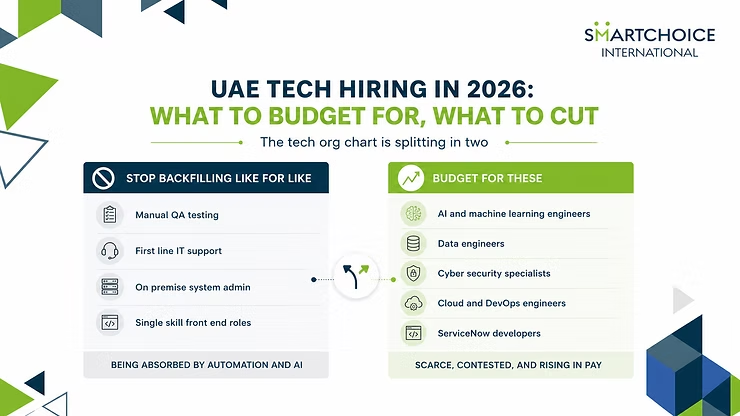
No role disappears overnight, but a few are shrinking fast, and backfilling them like for like is rarely the right call in 2026.
Manual software testing is the clearest example. Automated testing frameworks now cover the repetitive checks that once needed a room of manual testers, so teams are hiring fewer pure manual QA people and more engineers who can build and maintain test automation.
First line IT support is going the same way. Chatbots and agentic AI resolve a growing share of routine tickets, password resets and status questions, which means the entry level service desk is thinner than it was.
The same applies to on premise infrastructure roles. As more UAE businesses move to the cloud, demand for classic on site system administrators is fading, while cloud focused engineers stay in short supply. Single skill front end roles built around routine page building are also being folded into broader product teams.
None of this means these professionals have no future. It means the narrow, repetitive version of each job is being absorbed by tooling. The practical takeaway is simple. Before you replace someone who leaves, ask whether the role should come back in the same shape, or whether the budget would do more somewhere else.
The roles driving UAE tech hiring in 2026
This is where the competition, and the spending, is heading.
AI, machine learning and data, the biggest pull in UAE tech hiring
Artificial intelligence and machine learning sit at the top. Demand for AI jobs in Dubai and across the UAE has grown sharply as companies move from talking about AI to shipping it, and the people who can actually build, deploy and maintain models are scarce. If this is on your roadmap, plan early and consider specialist support to build your data, AI and machine learning teams, because these candidates rarely stay on the market for long.
Data engineering and analytics follow closely. Models and dashboards are only as good as the pipelines feeding them, so data engineers are now some of the hardest people to secure in the region.
Cyber security, cloud and ServiceNow, the skills in shortest supply
Cyber security is the other role no one can ignore. Tighter regulation and a steady rise in attacks have pushed cyber security up every hiring list in the UAE, and salaries have moved with it. Skilled security engineers are genuinely difficult to find, which is why many firms bring in outside help to source cyber security specialists rather than wait months for an inbound application.
Cloud and DevOps engineers remain in constant demand as migration projects continue, and the market for strong software, cloud and DevOps talent stays tight. Enterprise platform skills, ServiceNow in particular, command a real premium too. As more UAE enterprises adopt ServiceNow, the pool of people who can configure and extend it has not kept pace, so ServiceNow developers and consultants are worth planning for well ahead of need.
What you will actually pay: the highest paying tech jobs in the UAE
Search interest in the highest paying jobs in the UAE and Dubai keeps rising, and for good reason. Pay for the roles above has moved faster than general salary growth.
AI and machine learning engineers, senior cloud architects and experienced security leads sit at the top of the range. ServiceNow specialists carry a niche premium because supply is so thin. Even a mid level software developer salary in Dubai has crept up as teams compete for the same shortlist. [Neda: this is the ideal spot to drop your latest AED ranges from recent placements. Real numbers from your own data will make the piece far more authoritative than any public estimate, and it is exactly the kind of proprietary detail that earns links.]
One shift is worth planning for. Senior candidates in the region now compare a Dubai package against remote offers from Europe and beyond, so pay alone is no longer the whole pitch. Visa certainty, flexibility and the quality of the work matter just as much. Benchmarking properly before you open a role saves painful renegotiation later, something we explore in our piece on why Dubai has become a magnet for tech talent.
How to fill these roles when every UAE company is hiring
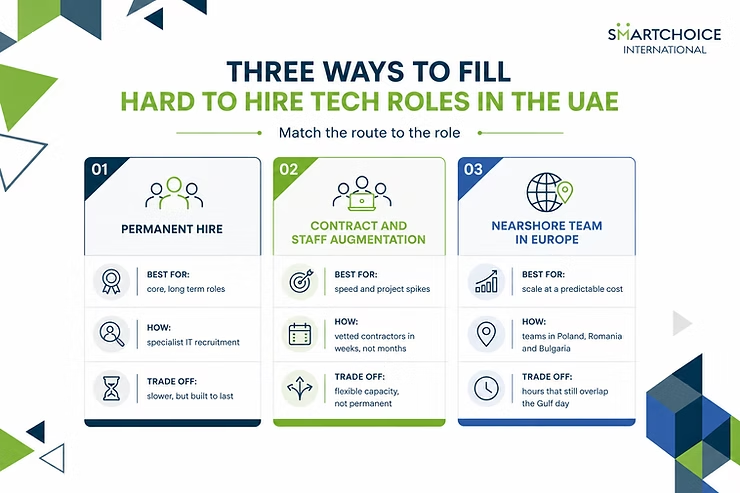
When the whole market wants the same people, the way you hire matters as much as who you hire. Three routes tend to work, often in combination.
Permanent hiring still makes sense for roles at the core of your product. A specialist partner shortens the search and protects you from a slow, expensive miss, which is the main reason companies work with IT recruitment consultants in Dubai rather than relying on job boards alone. If you are hiring for the long term, our team works as an IT recruitment agency in Dubai and the UAE built specifically for technology roles.
Contract and staff augmentation give you speed when a project cannot wait for a permanent search. Bringing in vetted contractors through an IT staffing model lets you add capacity in weeks rather than months, and it is worth reading our view on when staff augmentation beats a managed service before you decide.
Nearshore teams in Europe are the third option, and increasingly the smartest one for scale. Rather than compete for a tiny local pool, many UAE firms now build part of their engineering capability through nearshore teams in Poland, Romania and Bulgaria, with working hours that still overlap the Gulf day. It is often the fastest way to reach AI, data and DevOps skills at a predictable cost. Our UAE team can help you decide which mix fits your roadmap.
Your 2026 tech hiring checklist
Before you sign off headcount for the year, run through this:
Review every open role and ask whether it should return in the same shape or be redesigned.
Move budget from shrinking roles, such as manual testing and first line support, towards AI, data, cloud and security.
Benchmark pay for your priority roles against current market rates, not last year's.
Decide the right mix of permanent, contract and nearshore for each part of the roadmap.
Start searches for scarce skills early, since the best candidates are rarely available for long.
Make the offer about more than salary, including visa support, flexibility and genuinely interesting work.
The companies that build the strongest teams in 2026 will not be the ones with the biggest budgets. They will be the ones spending in the right places. If you want a second view on your plan, or help filling the roles that matter most, talk to our team and we will share what we are seeing across the UAE market.
Frequently asked questions
AI and machine learning engineers, data engineers, cyber security specialists, cloud and DevOps engineers, and ServiceNow developers are the roles UAE companies compete hardest for in 2026. At the same time, automation and AI are reducing demand for manual testing and first line IT support.